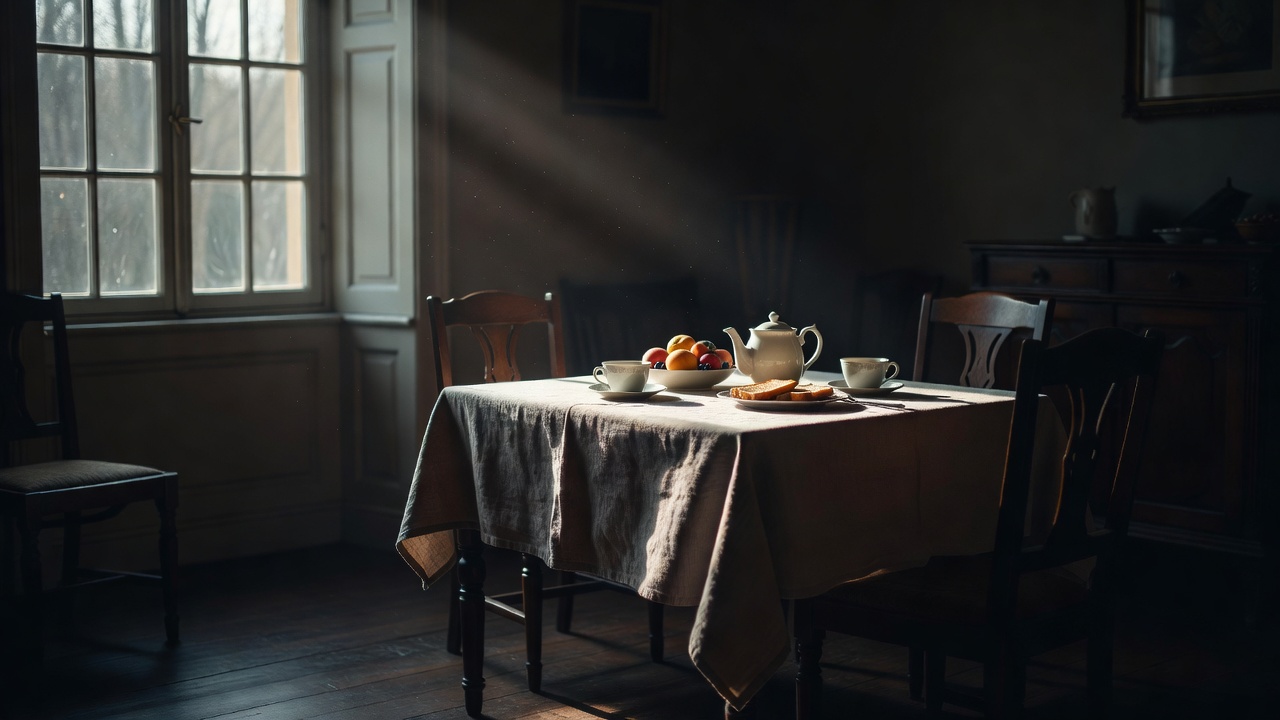
◐ Read the room before the menu
A premium breakfast room makes a promise before anything arrives. The entrance establishes whether you should pause, approach a host or find your own seat. The furniture suggests whether the visit is meant for a quick coffee or a long conversation. Neither form is inherently superior. What matters is coherence: a leisurely visual language paired with hurried service feels less generous than a modest room that clearly understands its purpose.
Begin with your own intention. A quiet breakfast with a book requires different conditions from a reunion or a business conversation. Rather than asking whether a room looks luxurious, ask whether its arrangement supports the morning you actually want. This separates useful atmosphere from scenery.
☀ Light is a working material
Daylight has practical consequences. A table beside a window may be attractive but uncomfortable when low sun catches polished cutlery or a glossy menu. A darker interior can feel composed, yet become tiring if reading requires a phone torch. Assess the table rather than the overall photograph: can you see the food, your companion and the bill comfortably?
Claridge’s and The Wolseley provide different public reference points for studying an established London dining identity. Their official websites show rooms and describe their hospitality; those images are useful starting material, not proof of conditions at a particular table. Avoid assuming that a room photographed in one light will look identical during your chosen service.
≈ Listen beyond the music
Acoustics are often the hidden difference between elegance and fatigue. Stone, glass and high ceilings can amplify the movement of chairs, crockery and conversation. Upholstery and generous spacing may soften the room, but photographs cannot tell you how effectively. Listen for the combined effect of coffee preparation, clearing and music, not simply whether a soundtrack is tasteful.
The Delaunay and The Ritz London offer further reference points for contrasting dining-room character. They are not assigned acoustic scores here: we have not measured them. The useful question is transferable to any venue. Can two people speak naturally without leaning across the table, and does the room remain comfortable as it fills?
↔ Furniture decides how long you stay
A chair can look excellent and still be wrong for breakfast. Seat height, back support and the distance to the table affect how easily you cut toast, pour tea or work with a laptop. Table size matters too. A setting that already contains multiple glasses, flowers and extensive cutlery may leave little room when dishes arrive.
Watch circulation without turning staff into a spectacle. There should be a practical route to your seat and enough clearance for service. If a bag must occupy the walkway, the arrangement is not working for you. Ask politely about another table rather than interpreting discomfort as the inevitable cost of an impressive interior.
◇ Character without borrowed status
Café Central in Vienna and Caffè Florian in Venice are useful reminders that a famous setting carries cultural associations before a guest enters. The Balmoral in Edinburgh offers a different hotel context. Their histories and visual identities are worth researching through official sources, but heritage does not answer every practical breakfast question. It does not establish current availability, quietness or accessibility.
Likewise, the contemporary visual identity of Sketch in London demonstrates how strongly a restaurant can communicate through interiors. That is a design reference, not an assertion that every room or service there offers breakfast. Check the specific dining space, meal and date before transferring a visual impression into a booking plan.
✓ Make an atmosphere judgment you can explain
After sitting down, choose three concrete observations: perhaps comfortable light, an intrusive speaker and generous table spacing. This produces a more useful judgment than “exclusive” or “stunning.” It also helps a companion understand whether the room suits their needs. Atmosphere is personal, but the reasons for your response need not remain vague.
Do not let one striking detail stand in for the whole experience. A beautiful ceiling cannot compensate for a chair that causes discomfort, just as a plain entrance need not diminish a thoughtful meal. The room earns its place when its decisions remain helpful after the initial impression has passed. Next, examine whether the plate follows the same discipline.
Sources to consult
- Claridge’s — official hotel and dining information
- The Wolseley — official restaurant website
- The Delaunay — official restaurant website
- The Ritz London — official hotel website
- Café Central — official café website
- Caffè Florian — official website
- The Balmoral — official hotel information
- Sketch — official rooms and dining information